
Why is one room in my house so hot? (And how to fix it)
One hot room is almost always a glass problem: west or south windows taking in sun the AC can't keep up with. Here is how to check, and how to fix it.
5 min read · Updated October 30, 2026
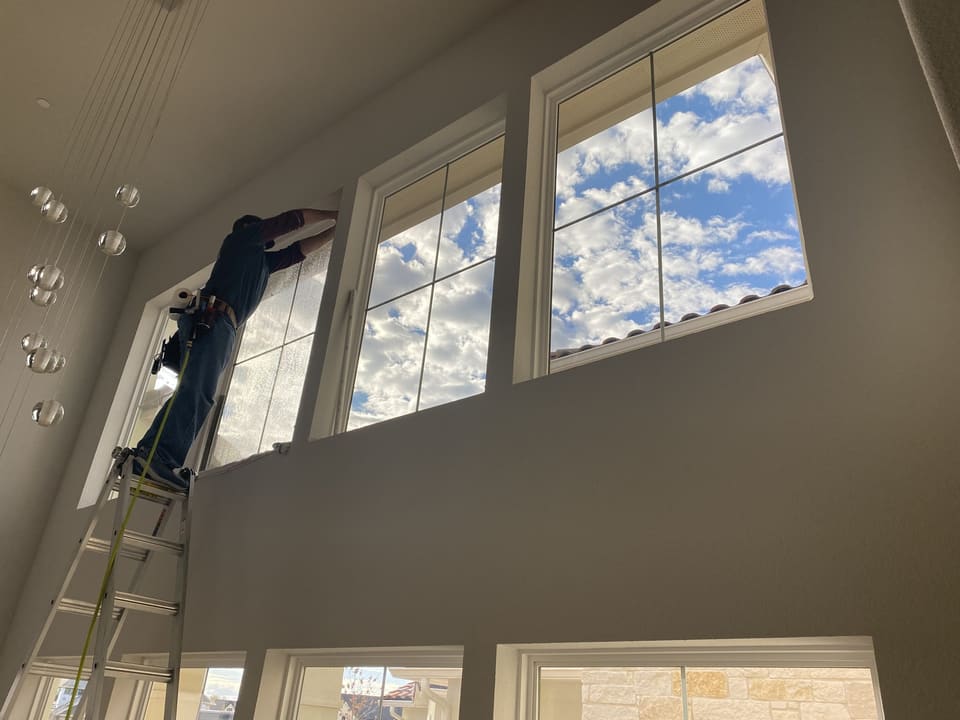
If one room in your house is always hotter than the rest, and that room gets direct sun, the windows are almost always the reason. West- and south-facing glass lets in solar heat faster than the air conditioning can remove it, so the thermostat in the hallway is satisfied while the bonus room, the sunroom or the great room with the two-story windows sits several degrees warmer. Fix the glass and you usually fix the room.
That is the short answer. Here is how to tell whether it applies to your room, and what actually works.
First, check whether it is the sun
Stand in the room at 4 p.m. on a clear day. If sunlight is falling across the floor, the furniture or the bed, the heat you feel is coming in through that glass. Put your hand on the window: on a hot afternoon, glass in direct sun is noticeably warm to the touch, and so is everything the light lands on.
Now check the same room at night or on a cloudy day. If it is comfortable then, and only hot when the sun is on the glass, you have a solar heat problem, not an air conditioning problem.
If the room is hot even with no sun on it, look elsewhere first. A supply vent that is closed, blocked or barely blowing, a long duct run to a room over the garage, missing attic insulation or a return air path that is too small will all make one room run warm. An HVAC contractor can check airflow at the register in a few minutes. Film will not fix a duct.
Why the glass wins
A window is the weakest point in a wall for heat. Insulated walls slow heat down; glass lets sunlight straight through, and that light turns into heat when it hits the floor, the sofa and the walls. The heat then stays in the room.
Direction matters more than most people expect. West glass takes the low, direct sun of the late afternoon, right when the house has already absorbed a full day of heat; this is the classic hot room. South glass takes sun for most of the day, especially in fall and winter when the sun sits lower. Tall and two-story windows multiply the problem: a great room with a wall of glass above the main windows is taking in sun the whole house was not sized for.
The air conditioning is usually sized for the whole house, and the thermostat sits in one place. The system shuts off when the hallway is cool, while the sunny room keeps gaining heat.
What fixes it
You have four real options, and they are not equal.
Blinds, shades and curtains help when they are closed, but they stop the heat after it is already through the glass, and they take the view and the daylight with them. Most people open them again by noon. Our window film vs. blinds and shades comparison goes through this in detail.
New windows work, at a cost and timeline that make sense mainly when the windows are failing anyway.
Turning the thermostat down cools the rest of the house further and costs more every month without fixing the room.
Window film stops the heat at the glass you already have. 3M Prestige is nearly clear and rejects up to 97% of infrared heat without darkening the window, so the room keeps its daylight and its view. If glare on a TV or a desk is part of the problem, 3M Night Vision, in light-to-medium shades, cuts glare up to 83% and keeps the view out at night. Both block up to 99% of UV, which also slows the fading of floors and furniture in the same sunny room.
Film is not dark car tint. Car-style tint cools a room by making it darker. Prestige and the lighter 3M Ceramic shades reject heat with multi-layer optics or nano-ceramics instead, which is why you can stand in the room afterward and still see the yard.
Start with the one room
You do not have to film the whole house. Start with the one room that bothers you: the bonus room over the garage, the west-facing primary bedroom, the living room with the wall of glass. Film that room’s sun-facing glass first, live with it through a summer, and decide about the rest later.
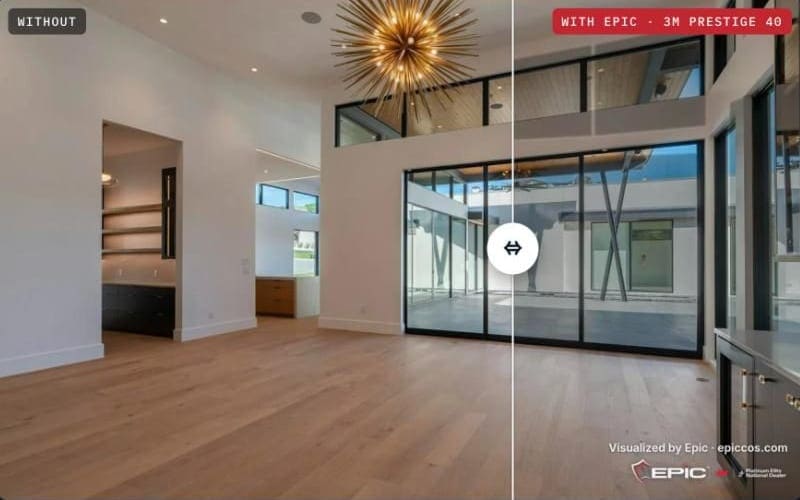
To see what it looks like before anyone comes out, try the free window film visualizer on a sample living room with west-facing glass, or upload a photo of your own window. The window film cost guide explains what moves the price.
How Epic does it
A Solutions Advisor comes to the house for about 30 minutes, checks which windows actually take the sun, confirms the glass type and window warranty, and puts film samples on your own glass so you choose by looking, not from a chart. You get a written estimate, window by window. Installation is usually done in one visit by Epic’s own Certified Installation Specialists, never subcontractors: the same crews that install security film in schools. 3M residential films carry a limited lifetime 3M warranty when professionally installed.
More on what film does for homes is on the residential window film page, how Epic chooses film by elevation is on the solar control page, and every 3M film we install is on the 3M window film page. Epic works nationwide; find your city.
See 3M film on a room like yours before you book anything.
Not sure what a visualizer is? It’s a picture of a sample living room with west-facing glass. Pick a 3M film, drag the handle across the window and compare the room with and without it, while the light and heat numbers change beside it. You can also upload a photo of your own window; it stays on your phone or computer.
- 1Pick a room
- 2Pick a 3M film
- 3Drag to compare
Ready for a firm number on your glass?
A free on-site assessment. Measurements, film recommendation, and a written estimate — no pressure, no obligation.
 Cookies on epiccos.com
Follow the work
Real installs, real tests, real schools. Pick the feed you actually open — same crew, same standard everywhere.