
What an energy analysis checks before you buy window film
A window film energy analysis should start with your glass, equipment and rate, rank every 3M film by savings, and measure the result before you commit.
4 min read · Updated November 5, 2026
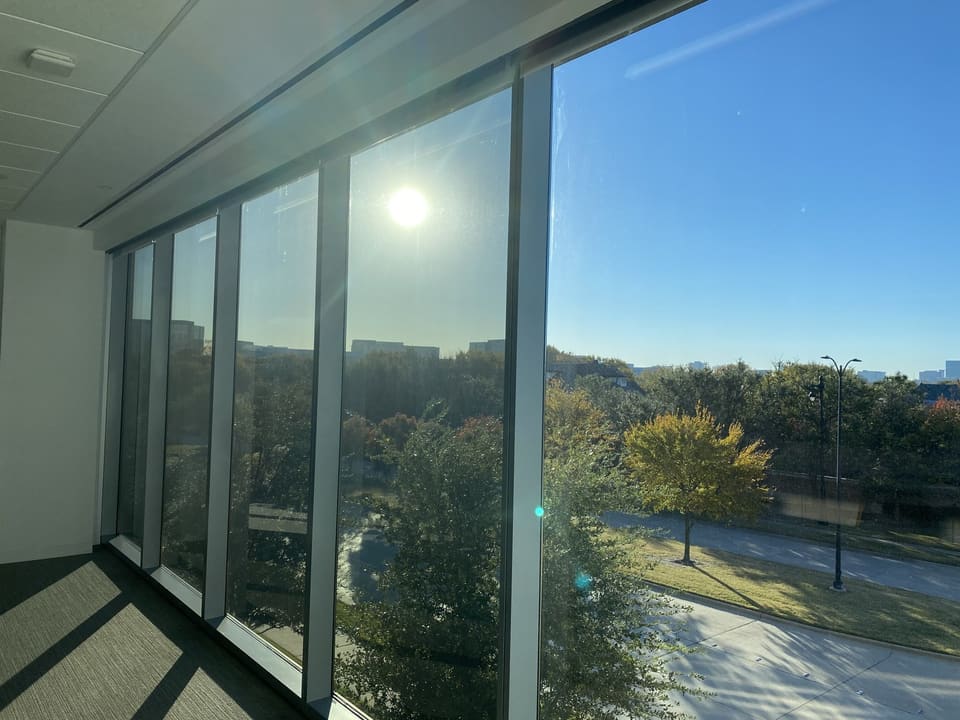
A window film energy analysis should start with your building, not a brochure. It should take in the glass on each elevation, your cooling equipment, your electricity rate and your climate, rank every 3M film by the dollars it would save, and then, if you want proof, measure the result on your own glass before anyone commits. Epic’s Facility Energy Analysis works that way.
Start with the glass, elevation by elevation
The model begins with the building’s glass. For each elevation it needs the area of glass and its type: the glass type, or the rating label if the windows carry one. It also needs the HVAC tonnage and efficiency, a recent electric bill, and the annual heating cost where there is one. A Solutions Advisor gathers these on the walkthrough, or your facilities team can complete a one-page site data form before the visit.
Orientation matters more than most buyers expect. West glass takes the low afternoon sun after the building has already absorbed a full day of heat, and the analysis weights it accordingly. North glass that never sees direct sun counts for much less. A single whole-building average hides that difference, and that is one reason a generic calculator can point a building toward the wrong film.
Run the building, then rank every film
Next comes the building model. It estimates cooling energy from the equipment that is actually installed, for the building’s climate zone, and estimates how much of that cooling load comes through sun-exposed glass. Each elevation is modeled separately, so the result reflects the building as it is rather than an average of it.
Then every 3M sun-control film is run against that building, not against a laboratory sample of clear glass. The films are ranked by annual savings, simple payback and net benefit over the analysis horizon. The daylight each film keeps appears beside the dollars, so a facilities director can see what a film saves in energy and what it costs in light in the same table.
Measure it before you commit
A model is still an estimate, and the analysis says so. Epic can also prove the result on your own glass. One data logger sits on the glass and a second sits in the room, and each records its own readings. The test starts with the clear glass as it is. Then one, two or three film samples go on the same spots, and the same readings are collected in the same sun. The measured reduction is printed next to each film’s published 3M specification, so the spec and the field result can be read on one page.
A brochure can print a percentage. A logger on your glass produces before-and-after readings, and those readings are worth asking for before you sign.
What a payback should look like
Payback on sun-exposed commercial glass typically runs two to six years. That range is a benchmark for orientation, not a promise for any one building. Single-pane glass, heavy west exposure, high electricity rates and long cooling seasons shorten it. Little sun on the glass or a short cooling season lengthens it.
This article does not quote a savings percentage on purpose. Any energy number you see should come from an analysis of the building it describes.
Questions to ask any analysis provider
Before you accept a number, ask whether every input is visible, so your facilities or finance team can check the arithmetic. Ask whether every film is ranked or only the one the seller carries. Ask whether the savings are measured on your glass before you commit, or only promised afterward. And ask what happens if your project needs a certified model for a utility incentive or an energy services contract. A good answer is that the provider works alongside your energy engineer and supplies the glazing inputs, rather than replacing that engineer.
Ready to see your own ranking? Request the Facility Energy Analysis for your building. If your glass takes the afternoon sun, start with the elevations that get the most of it. The film families and what each one is built to do are on the solar control window film page.
Questions people ask
What does an Epic Facility Energy Analysis need from my building?
Is the analysis a certified energy model?
What is a typical payback on window film?
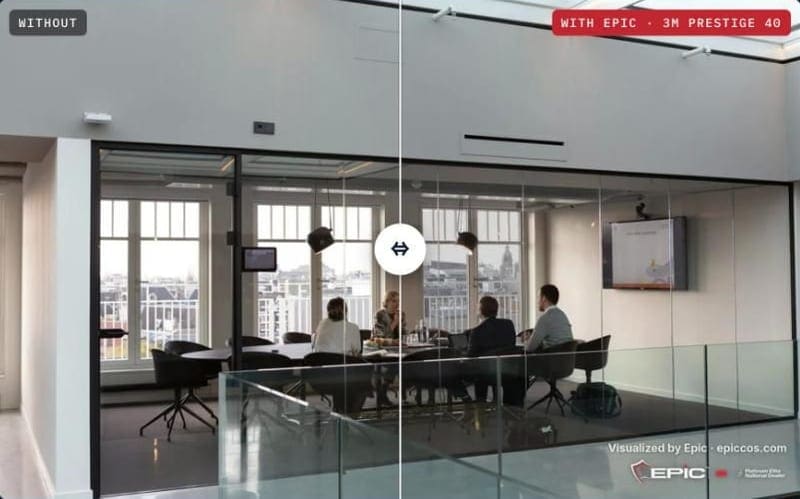
See every 3M film on an office before you choose.
The visualizer is a picture of a sample conference room with a wall of exterior glass. Pick a 3M film, drag the handle across the glass and compare with and without it, with 3M’s published light and heat numbers beside the picture. Upload a photo of your own building to see it there; the photo stays on your device.
- 1Pick a room
- 2Pick a 3M film
- 3Drag to compare
Ready for a firm number on your glass?
A free on-site assessment. Measurements, film recommendation, and a written estimate — no pressure, no obligation.
 Cookies on epiccos.com
Follow the work
Real installs, real tests, real schools. Pick the feed you actually open — same crew, same standard everywhere.