
How to stop hardwood floors from fading
Floors fade from UV, visible light and heat through the glass. Block the UV, cut the heat, and fading slows. Here is what works and what doesn't.
5 min read · Updated October 30, 2026
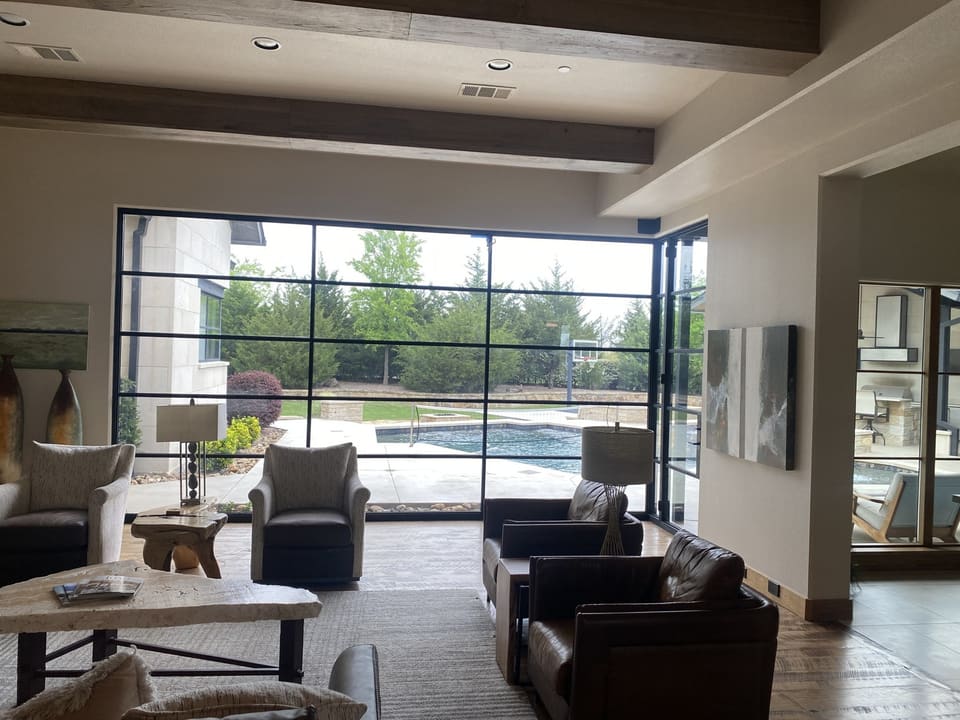
Hardwood floors fade because of the sunlight that comes through your windows: ultraviolet light is the biggest single cause, and visible light and heat do much of the rest. To slow it down, stop that light at the glass. Window film that blocks up to 99% of UV and rejects the sun’s heat protects the whole floor, all day, without closing the blinds. Nothing stops fading completely, but this is the closest you can get while still living with the view.
Here is what causes it, how to tell whether it is happening, and what each fix actually does.
What fades a floor
3M breaks the causes of fading down roughly like this: about 40% ultraviolet light, about 25% solar heat, about 25% visible light, and the rest from things like humidity, indoor lighting and the finish itself. UV is the biggest single cause, which is why blocking it matters most. It is not the only cause, which is why a film that also cuts heat does better than one that only blocks UV.
The floor finish and the wood species matter too. Some species darken in sunlight (cherry is the famous one) and others bleach lighter. Either way, the result is the same: a light patch where the sun falls every afternoon, and a dark rectangle where the rug used to be.
How to tell if it is happening
Lift a rug or slide a piece of furniture that has sat in the same place for a year near a sunny window. If the wood underneath is a different color than the wood around it, the sun is changing your floor. Look at the stretch of floor just inside a patio door or a west-facing window, too; the change usually starts there.
The good news is that you can see it early, and you can slow it from here.
What works, and what does not
Rugs protect only what they cover, and they create the dark-rectangle problem when you move them. Rotate them if you use them.
Blinds, shades and curtains work while they are closed. Most people open them, which is the point of having windows. A shade that is closed half the day protects the floor half the day.
UV-blocking floor finishes help, and a good refinish is worth it. They slow the change in the wood itself but do nothing about the heat or the visible light, and they wear off with foot traffic.
Window film stops the light at the glass, before it reaches the floor, every hour the sun is out. 3M window film blocks up to 99% of UV. A heat-rejecting film such as 3M Prestige, which rejects up to 97% of infrared heat, slows fading further because it takes on the heat share as well as the UV share. 3M Ceramic is the other clear option for the same job; both are nearly clear, so the room keeps its daylight and the floor still looks like the floor you chose.
Film will not stop fading entirely, because some visible light has to come through or there is no point having a window. No clear film stops fading completely. What film does is slow the process substantially on every pane at once, without asking you to close anything.
Which windows to start with
Start with the glass that throws sun across the floor you care about: west-facing windows, south-facing windows and patio or French doors. A floor-to-ceiling window or a sliding door next to a hardwood room is the first candidate. North glass that never sees direct sun usually is not worth filming for fading.
The same film also cuts the heat in that room, and if the room is hot in the afternoon, that may be the bigger reason to do it. Our article on why one room in a house runs hot covers that side.
To see the difference before anyone visits, open the free window film visualizer, pick a 3M film and drag across a sample living room with west-facing glass. The window film cost guide shows what moves the price.
How Epic does it
A Solutions Advisor visits for about 30 minutes, finds the windows that actually put sun on your floors, checks the glass type and window warranty, and puts film samples on your own glass so you can see them in your light. You get a written estimate, window by window. Installation is usually one visit by Epic’s own Certified Installation Specialists, never subcontractors. 3M residential films carry a limited lifetime 3M warranty when professionally installed, and they clean with ordinary glass cleaner after the first 30 days (care instructions).
More on what film does for homes is on the residential window film page, and every 3M film we install is on the 3M window film page. Epic works nationwide; find your city.
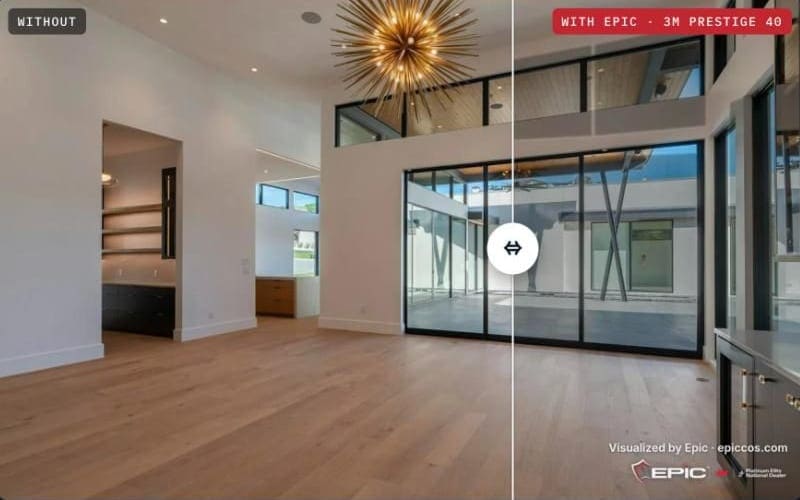
See 3M film on a room like yours before you book anything.
Not sure what a visualizer is? It’s a picture of a sample living room with west-facing glass. Pick a 3M film, drag the handle across the window and compare the room with and without it, while the light and heat numbers change beside it. You can also upload a photo of your own window; it stays on your phone or computer.
- 1Pick a room
- 2Pick a 3M film
- 3Drag to compare
Ready for a firm number on your glass?
A free on-site assessment. Measurements, film recommendation, and a written estimate — no pressure, no obligation.
 Cookies on epiccos.com
Follow the work
Real installs, real tests, real schools. Pick the feed you actually open — same crew, same standard everywhere.